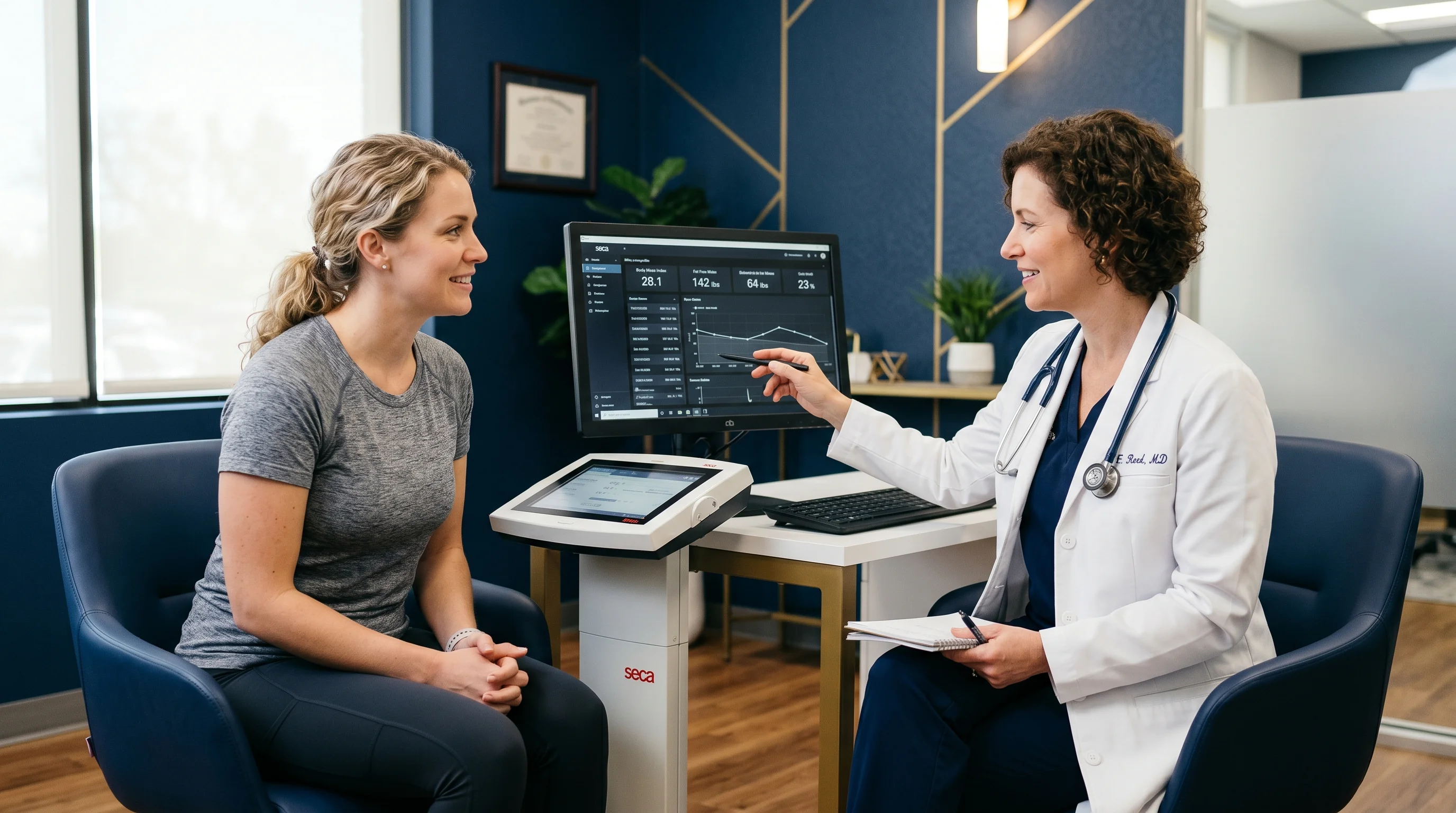
Medical Weight Loss in St. Louis, MO
Medical weight loss at St. Louis Pain Center includes GLP-1 medications like tirzepatide and semaglutide. Physician-supervised programs for lasting results.
St. Louis Pain Center is conveniently located in the south St. Louis community, serving the same area as Washington University School of Medicine-affiliated practices.
At a Glance
- Program: Physician-supervised medical weight loss with GLP-1 receptor agonist medications
- Medications: Tirzepatide and semaglutide available based on patient profile
- Clinical data: Tirzepatide achieved 20.2% body weight reduction vs semaglutide’s 13.7% in the SURMOUNT-5 trial
- Mechanism: GLP-1 medications regulate appetite, slow gastric emptying, and improve metabolic signaling
- Format: Ongoing medical supervision with regular follow-up appointments
- Connection to pain: Excess weight directly increases joint stress, nerve compression, and chronic pain
- Location: St. Louis Pain Center, 4455 Telegraph Rd #250, St. Louis, MO 63129
When Extra Weight Feeds Your Pain
Pain and weight gain trap each other. Your joints hurt, so you move less. You move less, so you gain weight. The added weight loads your joints harder, and the pain intensifies. This is not a failure of willpower. It is a biological feedback loop that diet and exercise alone cannot always break.
Every extra pound of body weight places approximately 4 additional pounds of force on your knees with each step. A person carrying 30 extra pounds puts 120 extra pounds of pressure on their knee joints thousands of times a day. Over months and years, that mechanical stress accelerates cartilage breakdown, inflames nerve endings, and compounds existing pain conditions.
In St. Louis, obesity rates consistently exceed national averages. Sedentary desk jobs, cold winters that limit outdoor activity, and calorie-dense Midwest diets create conditions where weight creeps upward year after year. For patients already managing chronic pain, the weight-pain cycle becomes nearly impossible to escape without medical intervention.
Medical weight loss gives your body a biological advantage. It reduces appetite at the hormonal level, helps you lose weight steadily, and relieves the mechanical burden on your joints so that other pain treatments can work more effectively.
What Is Medical Weight Loss?
Medical weight loss is a physician-supervised weight reduction program that uses FDA-approved medications alongside dietary guidance and ongoing monitoring to produce sustained, clinically significant weight loss.
The current generation of weight loss medications targets the GLP-1 (glucagon-like peptide-1) receptor system. GLP-1 is a hormone your gut produces after eating. It signals your brain to feel satisfied, slows the rate at which food leaves your stomach, and helps regulate blood sugar. In people with obesity, these signals often function poorly.
GLP-1 receptor agonist medications restore and amplify that signaling. They reduce hunger at the neurological level, not through stimulants or appetite suppressants that create jitteriness and rebound cravings.
Two GLP-1 medications have emerged as the leading options:
Semaglutide was the first to demonstrate dramatic weight loss results in clinical trials. It targets the GLP-1 receptor and has been shown to produce average weight reductions of approximately 13.7% of total body weight.
Tirzepatide targets both the GLP-1 and GIP (glucose-dependent insulinotropic polypeptide) receptors. This dual mechanism produces greater weight loss in head-to-head comparison. The SURMOUNT-5 trial directly compared tirzepatide to semaglutide and found that tirzepatide achieved a 20.2% body weight reduction compared to semaglutide’s 13.7%. That difference translates to meaningful additional pounds lost for most patients.
To put those numbers in context: a 250-pound patient on tirzepatide could expect to lose approximately 50 pounds over the treatment period. The same patient on semaglutide could expect approximately 34 pounds. Both represent significant improvements in health, mobility, and pain levels.
Medical weight loss at St. Louis Pain Center is not a prescription-and-go program. Patients receive regular monitoring, dosage adjustments, nutritional guidance, and integration with their existing pain management treatments.
Conditions We Treat with Medical Weight Loss in St. Louis
Excess body weight does not just create cosmetic concerns. It directly worsens multiple chronic pain conditions. Losing weight often produces improvements that rival or exceed the effects of medication changes or additional procedures.
Osteoarthritis and Joint Pain
Osteoarthritis is a wear-and-tear disease. The more force your joints absorb, the faster cartilage breaks down. Research shows that losing just 10% of body weight can reduce knee pain scores by 50% in patients with osteoarthritis. Weight loss reduces the mechanical cause of the disease, not just the symptom.
Chronic Back Pain
Excess abdominal weight shifts your center of gravity forward, increasing stress on the lumbar spine. This compresses discs, strains supporting muscles, and accelerates spinal degeneration. Medical weight loss reduces this anterior load and can significantly improve chronic low back pain.
Inflammatory Pain Conditions
Fat tissue is not inert. It produces inflammatory chemicals called cytokines that circulate throughout the body. These cytokines amplify pain signals and worsen conditions like fibromyalgia, rheumatoid arthritis, and chronic widespread pain. Reducing fat mass directly reduces systemic inflammation.
Neuropathy
Obesity increases the risk of developing peripheral neuropathy through multiple pathways: diabetes and prediabetes, direct nerve compression from excess tissue, and chronic inflammation that damages nerve fibers. Weight loss addresses all three contributing factors simultaneously.
Sleep Disruption and Pain Sensitivity
Obesity strongly correlates with obstructive sleep apnea and poor sleep quality. Sleep deprivation lowers your pain threshold. You literally feel more pain when you sleep poorly. Losing weight improves sleep quality, which in turn improves your body’s ability to manage pain.
Advantages of Medical Weight Loss at St. Louis Pain Center
A pain management clinic may seem like an unusual place to pursue weight loss. In reality, it is one of the most logical settings for patients whose weight and pain are interconnected.
Pain-Aware Medical Supervision
Most weight loss clinics do not treat chronic pain. Most pain clinics do not treat obesity. St. Louis Pain Center addresses both simultaneously. Your weight loss plan accounts for your pain limitations. Your pain treatment plan accounts for the benefits of weight reduction. This integrated approach produces better outcomes on both fronts.
Evidence-Based Medication Selection
The choice between tirzepatide and semaglutide depends on your medical history, current medications, insurance coverage, and weight loss goals. St. Louis Pain Center providers evaluate these factors and recommend the medication most likely to produce results for your specific situation. The SURMOUNT-5 data guides these decisions with real head-to-head evidence.
Ongoing Monitoring and Dosage Adjustment
GLP-1 medications require careful titration. Starting doses are low and increase gradually to manage side effects and optimize results. Regular follow-up ensures the dosage stays appropriate as your body changes. Side effects like nausea, which are common early in treatment, are managed proactively through dosing adjustments and dietary strategies.
Why Choose St. Louis Pain Center for Medical Weight Loss?
St. Louis Pain Center treats the connection between weight and pain that most clinics overlook. Patients do not need to coordinate between separate weight loss providers and pain management physicians. Treatment decisions account for both conditions from the start.
The clinic is located near Washington University School of Medicine, serving the same St. Louis community with physician-supervised care. Patients who need additional metabolic or endocrine evaluation have easy access to the broader medical network in the region.
This is a single-service category. For information about all services at St. Louis Pain Center, visit the homepage.
Convenient Access from Oakville, Mehlville, and South St. Louis
St. Louis Pain Center is located at 4455 Telegraph Rd #250, St. Louis, MO 63129. Patients visit from Oakville, Mehlville, Lemay, Affton, Concord, Arnold, Fenton, Crestwood, Sunset Hills, Webster Groves, and Kirkwood.
The office is minutes from Washington University School of Medicine, serving the same community with dedicated medical weight loss and pain care. Free parking is available on-site.
Schedule Your Medical Weight Loss Appointment
If excess weight is contributing to your chronic pain and traditional diets have not produced lasting results, medical weight loss with GLP-1 therapy may break the cycle. Call St. Louis Pain Center at (314) 846-2100 to schedule a consultation and discuss whether tirzepatide or semaglutide is right for you.
[Schedule an Appointment — (314) 846-2100]
Medical Weight Loss FAQs for St. Louis Patients
How much weight can I expect to lose?
Results vary based on starting weight, medication type, dosage, and adherence to dietary recommendations. Clinical trial data shows average weight loss of 20.2% with tirzepatide and 13.7% with semaglutide. Many patients exceed these averages with consistent follow-through.
How long do I need to take the medication?
GLP-1 medications work while you take them. Discontinuing the medication without establishing sustainable lifestyle changes can lead to weight regain. Your provider will discuss a long-term plan that may include maintenance dosing or a gradual transition strategy.
What are the common side effects of GLP-1 medications?
The most common side effects are gastrointestinal: nausea, constipation, and decreased appetite. These are usually most noticeable during the initial dose escalation period and improve as your body adjusts. Slow titration and dietary modifications reduce the severity of side effects.
Will losing weight actually help my pain?
The evidence is strong. Losing 10% of body weight reduces knee osteoarthritis pain by approximately 50%. Weight loss also reduces spinal loading, systemic inflammation, and neuropathy risk. Most patients with weight-related pain conditions report meaningful improvement as weight decreases.
Does insurance cover medical weight loss medications?
Insurance coverage for GLP-1 medications varies significantly between plans. Some plans cover these medications for obesity or diabetes. Others do not. The team at St. Louis Pain Center can help determine your coverage options and discuss alternatives if your plan does not cover a specific medication.
Am I a candidate for medical weight loss?
Medical weight loss with GLP-1 medications is generally appropriate for adults with a BMI of 30 or higher, or a BMI of 27 or higher with at least one weight-related health condition (such as chronic pain, diabetes, or hypertension). A consultation will determine whether this program is right for you.
Related Services
Medical weight loss works best when paired with other pain management strategies. Many patients combine weight loss with orthopedic treatments such as Hyaluronic Acid Injections or Physical Therapy to maximize joint function as weight decreases. Visit the homepage for a full listing of services at St. Louis Pain Center.
Frequently Asked Questions
Get Started Today
Ready to Start Your Recovery?
Take the first step. Our team is ready to help you reclaim your life from pain.