Neuropathy Treatment in St. Louis, MO
Neuropathy treatment for burning, tingling, and numbness in St. Louis. Nerve testing, medication protocols, and advanced therapies at St. Louis Pain Center.
Learn MoreNeuropathy in feet treatment in St. Louis. Specialized nerve therapies, neuromodulation, and rehabilitation to relieve burning, tingling, and numbness. (314) 846-2100.
Neuropathy in the feet causes burning, tingling, numbness, and pain that worsens over time without treatment. Nerve damage in the lower extremities most commonly results from diabetes, but other causes include chemotherapy, alcohol use, and vitamin deficiencies. At St. Louis Pain Center, we treat foot neuropathy with specialized neuropathy treatment, neuromodulation, and sports medicine rehabilitation to restore nerve function and relieve symptoms.
It begins as tingling in your toes. A pins-and-needles sensation that comes and goes. Then the burning starts. The soles of your feet feel like they are on fire, especially at night when you are trying to sleep. The sheets against your skin become unbearable. Socks feel wrong. Walking on bare floors sends shocks through your feet.
As the condition progresses, numbness replaces some of the pain. Your feet feel like they belong to someone else. You stumble because you cannot feel the ground beneath you. Balance becomes unreliable. The fear of falling is constant.
Neuropathy in the feet is the most common form of peripheral neuropathy. It follows a predictable pattern, starting in the toes and gradually moving upward. This “stocking distribution” reflects how the longest nerves in the body are the most vulnerable to damage.
Across the Midwest, diabetes and obesity rates remain among the highest in the nation. In the St. Louis metro area, these conditions are significant drivers of peripheral neuropathy. Many patients do not realize their foot symptoms are connected to their metabolic health until the nerve damage is well established. Early intervention makes a substantial difference in outcomes.
If your feet burn, tingle, or feel numb, do not wait for it to resolve on its own. Nerve damage is progressive. Treatment works best when it starts before significant nerve loss has occurred.
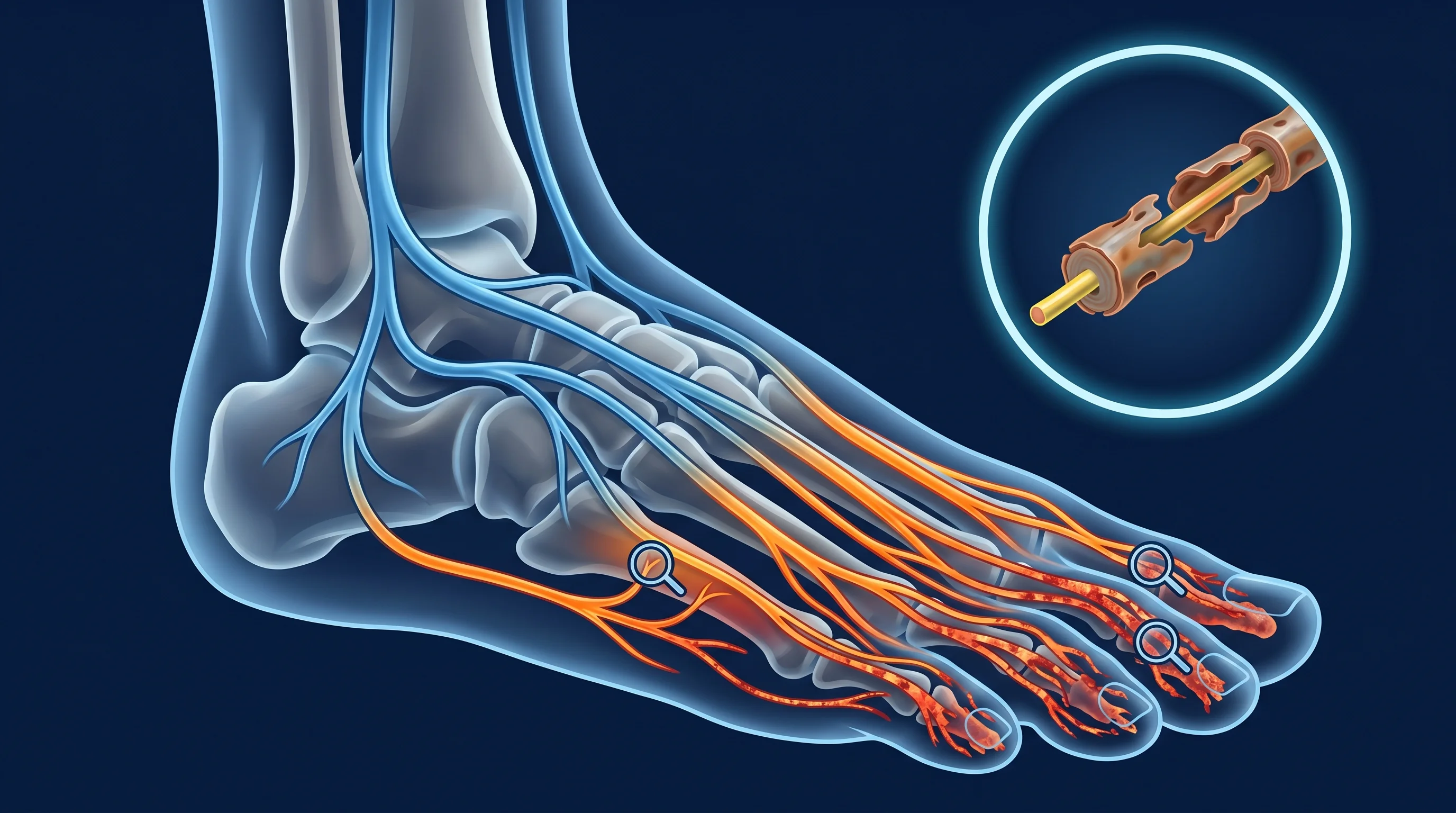
Peripheral neuropathy in the feet occurs when the small sensory nerves in the lower extremities are damaged, producing abnormal pain signals, numbness, and loss of protective sensation. The condition affects the longest nerves first, which is why symptoms typically begin in the toes and feet before progressing upward.
Peripheral nerves have three main types of fibers: sensory (feeling), motor (movement), and autonomic (involuntary functions). Foot neuropathy primarily affects sensory fibers, though motor and autonomic involvement can occur as the condition advances.
Small fiber neuropathy affects the thin, unmyelinated nerve fibers responsible for pain and temperature sensation. This produces burning, stinging, and heightened sensitivity. Large fiber neuropathy affects the thicker, myelinated fibers responsible for vibration and position sense. This produces numbness, balance problems, and difficulty detecting the position of the feet.
The loss of protective sensation is clinically significant. Patients with advanced foot neuropathy may not feel cuts, blisters, or pressure sores on their feet. These undetected injuries can lead to infections and serious complications, particularly in diabetic patients. Restoring nerve function and sensation is not just about comfort. It is a safety issue.
Diabetes is the leading cause of peripheral neuropathy in the feet. Chronically elevated blood sugar damages small blood vessels that supply the peripheral nerves. Over time, nerve fibers lose function and die. Approximately 50 percent of diabetic patients develop some degree of neuropathy. Both type 1 and type 2 diabetes carry this risk.
Certain chemotherapy agents, particularly platinum compounds, taxanes, and vinca alkaloids, are directly toxic to peripheral nerves. Chemotherapy-induced peripheral neuropathy can develop during treatment and may persist for months or years after chemotherapy ends. It affects up to 70 percent of patients receiving neurotoxic drug regimens.
In roughly 30 percent of cases, no specific cause is identified despite thorough evaluation. Idiopathic neuropathy is a diagnosis of exclusion. Many of these cases are believed to involve prediabetes or early metabolic dysfunction that has not yet reached the threshold for a diabetes diagnosis.
Vitamin B12 deficiency is a well-established cause of peripheral neuropathy. B12 is essential for myelin production, the insulating sheath that protects nerve fibers. Deficiency can result from poor dietary intake, pernicious anemia, or medications that impair B12 absorption, including metformin and proton pump inhibitors.
Chronic alcohol use damages peripheral nerves through direct toxicity and associated nutritional deficiencies. Alcoholic neuropathy typically affects both the feet and hands and is often accompanied by thiamine (vitamin B1) deficiency. Symptoms improve with abstinence and nutritional correction, though recovery can be slow.
The tarsal tunnel, located on the inner side of the ankle, can compress the tibial nerve as it passes into the foot. Tarsal tunnel syndrome produces burning, tingling, and numbness along the sole and toes. It is the foot equivalent of carpal tunnel syndrome in the wrist.
Effective treatment of foot neuropathy addresses nerve function at the cellular level while managing symptoms and preventing progression. The earlier treatment begins, the greater the potential for nerve recovery and symptom reversal.
Our approach to foot neuropathy is systematic. We identify contributing causes, assess the degree of nerve involvement, and build a treatment plan that targets both symptom relief and nerve repair. Passive symptom management alone is not enough. We aim to improve actual nerve function.
Our dedicated neuropathy treatment protocols target the damaged nerve fibers directly. These therapies promote nerve regeneration, improve blood flow to the peripheral nerves, and reduce the inflammation and oxidative stress that drive ongoing nerve damage. Patients with diabetic neuropathy, chemotherapy-induced neuropathy, and idiopathic neuropathy all benefit from this focused approach. Many patients report meaningful improvement in sensation, pain levels, and balance.
Neuromodulation modulates the electrical signals traveling along damaged nerve pathways. For foot neuropathy, this therapy can reduce the abnormal firing patterns that produce burning pain and hypersensitivity. It also supports nerve healing by optimizing the electrical environment surrounding damaged fibers. Neuromodulation is especially valuable for patients who have not responded adequately to medications or who wish to reduce their reliance on pharmaceutical pain management.
Balance and gait impairment from foot neuropathy respond well to structured rehabilitation. Our sports medicine program includes proprioceptive training to improve balance, gait retraining to reduce fall risk, and strengthening exercises for the intrinsic foot muscles and ankle stabilizers. Fall prevention is a critical component of neuropathy care, particularly for older adults. Rebuilding the body’s compensatory balance systems reduces injury risk even when sensation remains impaired.
Foot neuropathy demands more than a prescription for gabapentin. At St. Louis Pain Center, we provide targeted nerve treatment protocols that address the underlying damage, not just the symptoms. Our clinical approach draws on the latest evidence in peripheral nerve rehabilitation and aligns with the research standards maintained at institutions like Washington University School of Medicine. Patients throughout St. Louis trust our team for neuropathy care that produces genuine, measurable improvement in nerve function and quality of life.
St. Louis Pain Center is located at 4455 Telegraph Rd #250, St. Louis, MO 63129. We serve patients from Oakville, Mehlville, Lemay, Affton, Concord, Arnold, Fenton, Crestwood, Sunset Hills, Webster Groves, and Kirkwood. Our South County location is accessible from all major routes in the metropolitan area.
Nerve damage is progressive. The longer you wait, the harder it becomes to recover lost function. A thorough neuropathy evaluation identifies the cause, measures the severity, and determines the best treatment path. Call St. Louis Pain Center at (314) 846-2100 or request an appointment online.
[Schedule an Appointment]{.cta-button}
What does neuropathy in the feet feel like? Most patients describe a combination of burning, tingling, and numbness. The burning is often worst at night. Some experience sharp, electric shock-like pains. As the condition progresses, numbness becomes more prominent, and the feet may feel “wooden” or disconnected from the body.
Can neuropathy in the feet be reversed? Early-stage neuropathy has the best chance of improvement with treatment. Nerves can regenerate, but they do so slowly. The key is starting treatment before extensive nerve fiber loss has occurred. Even in moderate cases, patients often experience meaningful symptom reduction and improved function.
Is foot neuropathy always caused by diabetes? No. While diabetes is the most common cause, neuropathy in the feet can result from chemotherapy, vitamin deficiencies, alcohol use, autoimmune conditions, and other factors. In about 30 percent of cases, no specific cause is identified. A thorough evaluation helps determine the contributing factors.
Why is my neuropathy worse at night? Reduced sensory input at night means the brain pays more attention to abnormal nerve signals. There are also fewer distractions. Additionally, lying flat can increase blood flow to the feet, which may temporarily increase nerve activity. This nighttime pattern is one of the most common complaints among neuropathy patients.
Should I see a neurologist or a pain specialist for foot neuropathy? Both can be appropriate. Neurologists diagnose the condition and identify the cause. Pain specialists like those at St. Louis Pain Center focus on treating the nerve damage and managing symptoms. Many patients benefit from evaluation by both types of specialists.
Can I prevent my neuropathy from getting worse? Yes. Controlling blood sugar (in diabetic patients), correcting vitamin deficiencies, reducing alcohol intake, and starting targeted nerve treatment all slow or halt progression. Active treatment gives the nerves the best chance to stabilize and recover.
Foot neuropathy connects closely with other conditions we treat. Patients seeking a broader overview of nerve damage conditions should visit our neuropathy page. Diabetic patients with neuropathy may benefit from our specific diabetic neuropathy resource. Foot neuropathy is also a common contributor to chronic pain, particularly when symptoms have persisted for months or years.
Our specialists may recommend one or more of these evidence-based treatments for your condition.
Neuropathy treatment for burning, tingling, and numbness in St. Louis. Nerve testing, medication protocols, and advanced therapies at St. Louis Pain Center.
Learn More
Neuromodulation technique offers drug-free pain relief by recalibrating nerve signals. No side effects. Learn how it works at St. Louis Pain Center.
Learn More
Physical therapy at St. Louis Pain Center includes manual therapy, vestibular rehabilitation, and post-injection protocols for back, neck, knee, and shoulder pain.
Learn MoreGet Started Today
Take the first step. Our team is ready to help you reclaim your life from pain.