
Medication Management
Pain medication management with opioid-sparing protocols and multimodal strategies. St. Louis Pain Center tailors regimens for chronic pain patients.
Learn MoreSpecialized fibromyalgia treatment in St. Louis. Neuromodulation, medication management, and sports medicine for widespread pain relief. Call (314) 846-2100.
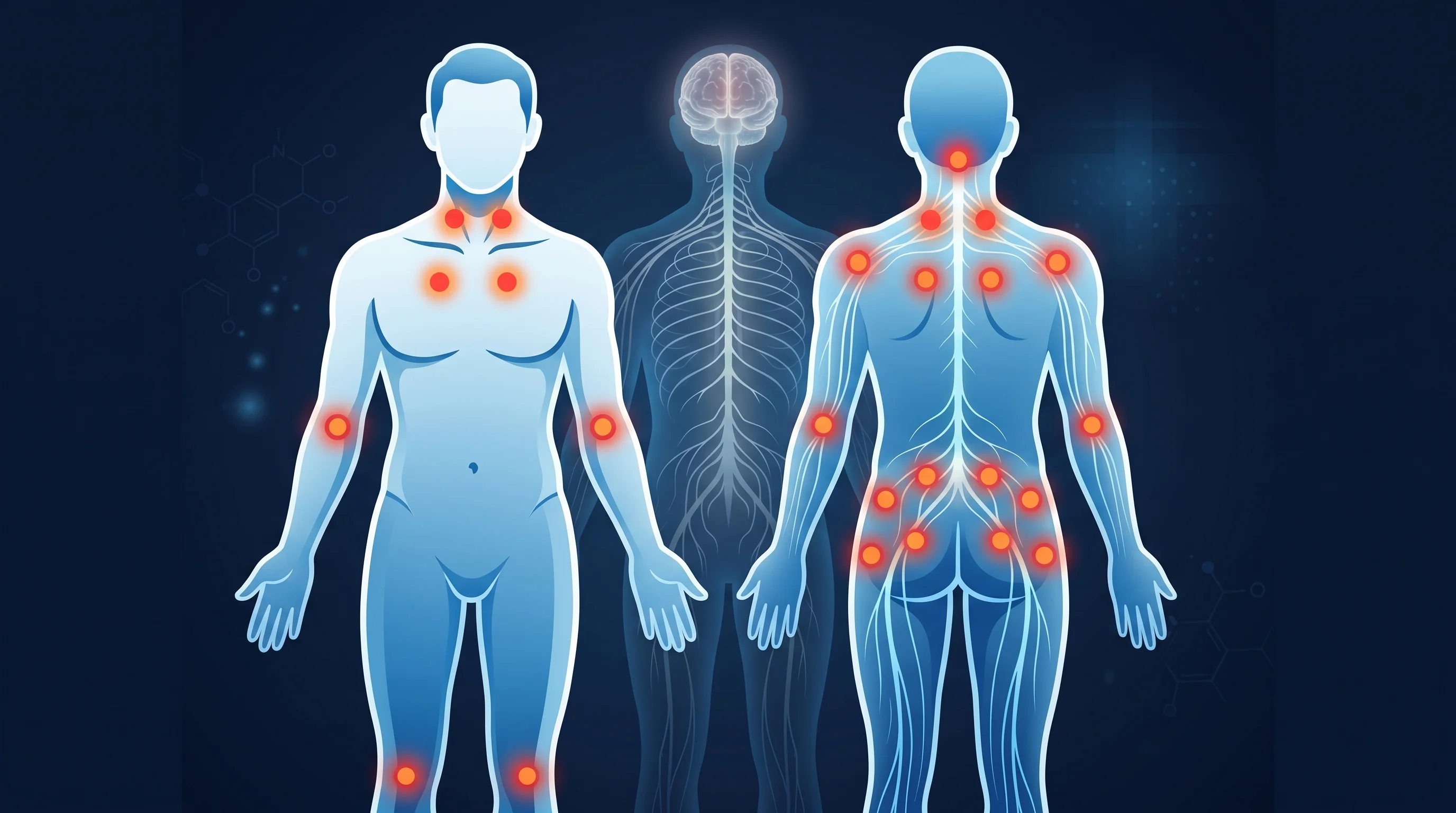
Fibromyalgia causes widespread musculoskeletal pain, fatigue, and cognitive difficulties. It results from abnormal pain processing in the central nervous system, not from tissue damage. At St. Louis Pain Center, we treat fibromyalgia with neuromodulation, medication management, and sports medicine rehabilitation to calm the overactive pain system and restore daily function. Real improvement is possible with the right approach.
The pain is everywhere. Your muscles ache. Your joints throb. Light pressure that should feel normal sends waves of discomfort through your body. You wake up exhausted no matter how long you sleep. Thinking through simple tasks feels like pushing through fog.
Then comes the part that hurts almost as much as the pain itself. The skepticism. Lab results come back normal. Imaging looks unremarkable. Some providers have implied, directly or indirectly, that the problem is psychological. Others have cycled you through medications that barely touched the symptoms.
Fibromyalgia is not imaginary. It is a recognized neurological condition with identifiable patterns in how the brain and spinal cord process pain signals. The disconnect between how bad you feel and how normal your tests look is actually a defining characteristic of the condition.
In St. Louis and across the Midwest, many fibromyalgia patients go years before receiving a correct diagnosis. The average is over two years. That is two years of unnecessary suffering, wasted appointments, and growing frustration. An accurate diagnosis changes everything because it opens the door to treatments that actually target the right mechanisms.
Fibromyalgia is a chronic condition characterized by widespread pain, fatigue, and cognitive dysfunction caused by abnormal pain processing in the central nervous system. The brain and spinal cord amplify pain signals, making normal sensations feel painful.
This process is called central sensitization. In a healthy nervous system, pain signals are filtered and modulated before reaching conscious awareness. In fibromyalgia, that filtering system malfunctions. The volume knob on pain is turned up and stuck.
Research has identified measurable differences in fibromyalgia patients. Levels of pain-signaling chemicals like substance P are elevated in spinal fluid. Functional brain imaging shows increased activity in pain-processing regions. Descending pain inhibition pathways, which normally dampen pain signals, are impaired.
Fibromyalgia affects approximately 2 to 4 percent of the population. Women are diagnosed more frequently than men, though the condition occurs in both. It often coexists with other conditions including irritable bowel syndrome, migraine, temporomandibular disorders, and chronic fatigue syndrome.
The condition is not progressive in the traditional sense. It does not damage joints or organs. It does, however, profoundly affect quality of life. Proper treatment targets the neurological mechanisms driving the symptoms rather than searching for tissue damage that does not exist.
The primary mechanism involves disrupted pain processing at the level of the brain and spinal cord. Neurotransmitter imbalances, particularly involving serotonin, norepinephrine, and substance P, alter how pain signals are transmitted and interpreted. This is the core dysfunction in fibromyalgia.
Many fibromyalgia cases begin after a significant physical event. Car accidents, surgeries, infections, or severe illnesses can trigger the onset. The initial injury heals, but the nervous system remains in a heightened pain state long after tissue recovery is complete.
Prolonged emotional stress activates the hypothalamic-pituitary-adrenal (HPA) axis, which regulates the body’s stress response. Chronic activation alters cortisol patterns and increases nervous system sensitivity. Stress does not cause fibromyalgia in isolation, but it is a significant contributing factor.
Poor sleep quality impairs the body’s ability to repair and regulate pain processing. Fibromyalgia patients frequently experience disrupted stage 3 deep sleep, the phase most important for physical recovery. Sleep deprivation alone can produce fibromyalgia-like symptoms in otherwise healthy individuals.
Fibromyalgia runs in families. First-degree relatives of fibromyalgia patients are eight times more likely to develop the condition. Specific genetic variations affecting pain receptor sensitivity and neurotransmitter metabolism have been identified.
Effective fibromyalgia treatment addresses the central nervous system dysfunction driving the symptoms rather than treating individual pain sites in isolation. The goal is to calm the overactive pain processing system, improve sleep quality, and rebuild physical function.
We recognize that fibromyalgia patients have often been through frustrating treatment experiences. Our approach is different. We start with validation of the condition, followed by a structured treatment plan targeting the specific mechanisms involved.
Neuromodulation directly addresses the dysfunctional nerve signaling at the heart of fibromyalgia. By modulating electrical signals along pain pathways, this therapy can reduce the amplified pain response characteristic of central sensitization. Patients often report decreased overall pain levels, improved sleep, and better cognitive function as the nervous system recalibrates.
Medication management for fibromyalgia focuses on agents that modify pain processing in the central nervous system. This includes medications that increase serotonin and norepinephrine levels, stabilize nerve signaling, and improve sleep architecture. We avoid reliance on opioids, which are ineffective for fibromyalgia and can worsen central sensitization. Dosing is carefully titrated to balance symptom relief with tolerability.
Structured physical activity is one of the most evidence-supported treatments for fibromyalgia. Our sports medicine team designs graduated exercise programs that start at your current tolerance level and progress systematically. Aerobic exercise, resistance training, and flexibility work all help recalibrate the pain processing system. The key is starting gently and building consistently. Exercise that is too aggressive too soon can trigger symptom flares.
Fibromyalgia requires a treatment team that understands the neuroscience behind the condition. At St. Louis Pain Center, we approach fibromyalgia as the legitimate neurological disorder it is. Our clinical team stays informed by the latest research in pain neuroscience, including findings from leading academic centers such as Washington University School of Medicine. Patients throughout St. Louis turn to us for fibromyalgia care that takes their symptoms seriously and delivers measurable improvement.
St. Louis Pain Center is located at 4455 Telegraph Rd #250, St. Louis, MO 63129. We serve patients from Oakville, Mehlville, Lemay, Affton, Concord, Arnold, Fenton, Crestwood, Sunset Hills, Webster Groves, and Kirkwood. Our South County location is convenient for patients across the greater metropolitan area.
You have lived with fibromyalgia symptoms long enough without clear answers. A proper evaluation identifies the patterns driving your pain and opens the door to treatments that target the right mechanisms. Call St. Louis Pain Center at (314) 846-2100 or request an appointment online.
[Schedule an Appointment]{.cta-button}
How is fibromyalgia diagnosed? Fibromyalgia is diagnosed based on clinical criteria: widespread pain lasting at least three months, along with fatigue, sleep disturbance, and cognitive symptoms. There is no single blood test or imaging study that confirms the diagnosis. A thorough evaluation rules out other conditions that can mimic fibromyalgia.
Is fibromyalgia a real medical condition? Yes. Fibromyalgia is recognized by the American College of Rheumatology, the World Health Organization, and all major medical organizations. Research has documented measurable neurological differences in patients with the condition. It is not psychological, and it is not imaginary.
Why do my normal lab tests not show anything wrong? Fibromyalgia affects how the central nervous system processes pain signals. Standard blood tests and imaging evaluate tissues and organs, which are typically unaffected. This discrepancy is a hallmark of the condition, not evidence that nothing is wrong.
Can exercise really help fibromyalgia? Yes. Regular, graduated exercise is one of the most effective treatments. It helps recalibrate pain processing, improves sleep, and reduces fatigue. The critical factor is starting at an appropriate intensity and increasing gradually to avoid symptom flares.
Will fibromyalgia get worse over time? Fibromyalgia is not a progressive disease in the way arthritis or neuropathy can be. Symptoms may fluctuate, but the condition does not cause joint or organ damage. Effective treatment can significantly reduce symptoms and improve quality of life.
Are opioids effective for fibromyalgia? No. Clinical evidence consistently shows that opioids are ineffective for fibromyalgia and may actually worsen the central sensitization that drives the condition. Medications that target neurotransmitter function are more appropriate and more effective.
Fibromyalgia frequently overlaps with other pain conditions. Many patients also meet criteria for chronic pain syndromes that share central sensitization mechanisms. Peripheral nerve involvement may produce symptoms similar to neuropathy, and distinguishing the two is important for treatment selection. Spinal pain is common in fibromyalgia patients, and our back pain page provides additional context for those experiencing prominent lumbar or thoracic symptoms.
Our specialists may recommend one or more of these evidence-based treatments for your condition.
Pain medication management with opioid-sparing protocols and multimodal strategies. St. Louis Pain Center tailors regimens for chronic pain patients.
Learn More
Neuromodulation technique offers drug-free pain relief by recalibrating nerve signals. No side effects. Learn how it works at St. Louis Pain Center.
Learn More
Physical therapy at St. Louis Pain Center includes manual therapy, vestibular rehabilitation, and post-injection protocols for back, neck, knee, and shoulder pain.
Learn MoreGet Started Today
Take the first step. Our team is ready to help you reclaim your life from pain.