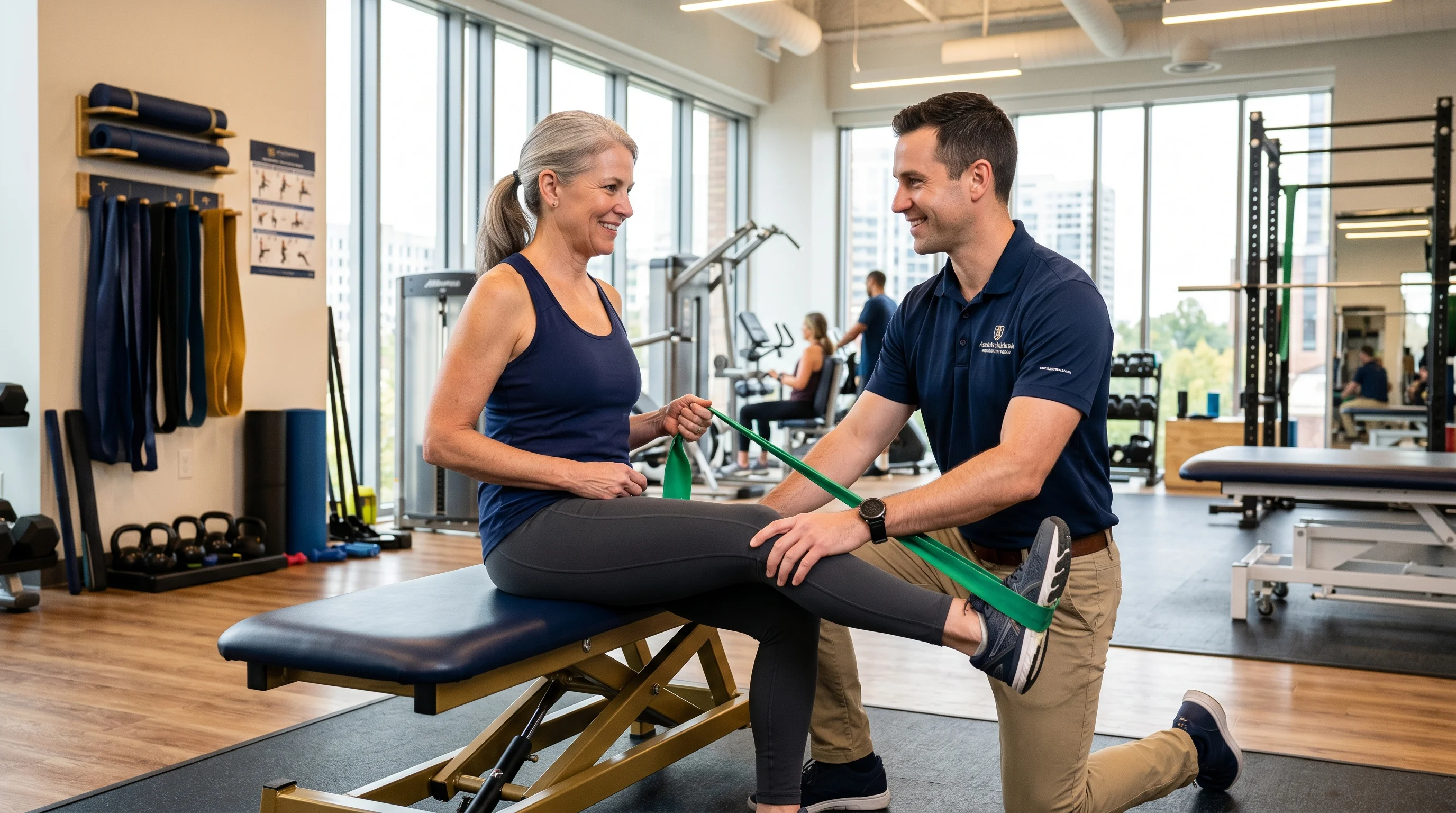
Physical Therapy in St. Louis, MO
Physical therapy at St. Louis Pain Center includes manual therapy, vestibular rehabilitation, and post-injection protocols for back, neck, knee, and shoulder pain.
St. Louis Pain Center is conveniently located in the south St. Louis community, serving the same area as Washington University School of Medicine-affiliated practices.
At a Glance
- Service: One-on-one physical therapy for pain conditions, injuries, and post-procedure rehabilitation
- Specialties: Manual therapy, therapeutic exercise, vestibular rehabilitation, post-injection protocols
- Conditions: Back pain, neck pain, knee pain, shoulder pain, sciatica, fibromyalgia, vertigo
- Integration: Coordinated directly with pain management providers in the same clinic
- Session length: Typically 45 to 60 minutes
- Location: St. Louis Pain Center, 4455 Telegraph Rd #250, St. Louis, MO 63129
When Pain Limits More Than Just Movement
You canceled plans again. Not because the pain was the worst it has ever been. Just because you could not predict whether your body would cooperate. Maybe your back locks up getting out of bed. Maybe your shoulder catches when you reach for something overhead. Maybe the room spins when you turn your head too quickly.
Chronic pain changes behavior before it changes anatomy. You stop lifting. You stop bending. You stop turning your head to check your blind spot. Each avoidance feels small. Over time, these small concessions add up to a life built around pain instead of activity.
In St. Louis, the pattern is common. Desk jobs shorten hip flexors and weaken core muscles. Cold winters reduce walking, swimming, and outdoor movement for months at a time. The muscles that protect your spine, stabilize your knees, and support your shoulders lose conditioning. When spring arrives and activity increases, undertrained bodies break down.
Physical therapy reverses this pattern. It identifies which structures have weakened, which movement habits have changed, and which tissues need targeted rehabilitation. The goal is not just pain relief. It is rebuilding the physical foundation that keeps pain from returning.
What Is Physical Therapy?
Physical therapy is a hands-on, evidence-based treatment that restores movement, reduces pain, and rebuilds strength through manual techniques, targeted exercises, and functional training.
Physical therapy works through two complementary mechanisms. The first is manual therapy: hands-on techniques where a therapist mobilizes joints, releases soft tissue restrictions, and restores range of motion that pain or injury has limited. The second is exercise therapy: progressive strengthening, stretching, and neuromuscular training that rebuilds the body’s capacity to handle daily demands without pain.
Manual therapy addresses what the body cannot fix on its own. A joint that has stiffened after months of guarding needs external force to restore its glide. Muscle tissue that has developed trigger points or adhesions needs direct pressure and manipulation to release. These techniques produce immediate improvements in mobility and often reduce pain within the first few sessions.
Exercise therapy builds on those gains. Once a joint moves freely again, the surrounding muscles need to relearn how to support it. Without this step, the joint stiffens again and pain returns. Progressive loading, done carefully and adjusted to each patient’s tolerance, creates lasting structural change.
At St. Louis Pain Center, physical therapy also includes specialized protocols:
Vestibular rehabilitation treats vertigo, dizziness, and balance disorders caused by inner ear dysfunction or central nervous system conditions. Specific head and eye movement exercises retrain the vestibular system to process motion signals correctly. Patients with benign paroxysmal positional vertigo (BPPV), vestibular neuritis, or post-concussion dizziness often experience significant improvement within a few sessions.
Post-injection rehabilitation maximizes the benefit of pain management procedures. After a joint injection, nerve block, or regenerative treatment, physical therapy ensures the reduced pain window is used productively. Patients strengthen tissues, restore movement patterns, and build capacity while their pain is controlled.
Conditions We Treat with Physical Therapy in St. Louis
Physical therapy applies to nearly every musculoskeletal and neurological pain condition. At St. Louis Pain Center, therapy programs are built around each patient’s diagnosis, functional limitations, and treatment goals.
Back Pain
Back pain is the most common reason patients seek physical therapy. Disc herniations, spinal stenosis, muscle strains, and degenerative disc disease all respond to targeted rehabilitation. Therapy focuses on core stabilization, spinal mobility, and posture correction. Patients learn movement strategies that protect the spine during daily activities and reduce the mechanical triggers that cause pain flare-ups.
Neck Pain
Neck pain often stems from forward head posture, desk ergonomics, and cervical disc degeneration. Manual therapy restores cervical range of motion. Strengthening exercises target the deep neck flexors and scapular stabilizers that maintain proper head position. Patients with cervicogenic headaches frequently report reduced headache frequency alongside improved neck function.
Knee Pain
Knee pain from osteoarthritis, ligament injuries, meniscus damage, and patellofemoral syndrome benefits from physical therapy that strengthens the quadriceps, hamstrings, and hip stabilizers. These muscles absorb force that would otherwise transfer directly to the knee joint. Stronger muscles mean less joint stress and less pain.
Shoulder Pain
Shoulder pain from rotator cuff injuries, impingement, frozen shoulder, and post-surgical rehabilitation requires careful progression. The shoulder is the most mobile joint in the body. Restoring its function demands precise exercise selection that strengthens without aggravating damaged tissue.
Sciatica
Sciatica produces pain that radiates from the lower back through the buttock and down the leg. Physical therapy for sciatica identifies the source of nerve compression, whether from a disc herniation, piriformis tightness, or spinal stenosis, and applies targeted treatment. Nerve gliding exercises, core stabilization, and postural training reduce compression and improve symptoms.
Fibromyalgia
Fibromyalgia presents a unique challenge because exercise can initially increase pain before producing long-term benefit. Graded exercise therapy, starting at very low intensity and increasing gradually, has strong evidence for reducing fibromyalgia pain and improving function. The key is progression that respects the patient’s current tolerance while steadily expanding it.
Vertigo and Vestibular Disorders
Vestibular rehabilitation for vertigo and balance disorders uses specific repositioning maneuvers and gaze stabilization exercises. BPPV, the most common type of vertigo, can often be resolved in 1 to 3 treatment sessions using the Epley or Semont maneuver. More complex vestibular conditions require progressive balance training and habituation exercises over several weeks.
Advantages of Physical Therapy at St. Louis Pain Center
Physical therapy is widely available. What separates one clinic from another is integration with medical care, therapist specialization, and treatment philosophy.
Direct Coordination with Pain Management
Most standalone physical therapy clinics operate separately from your pain physician. Communication happens through faxed notes and delayed phone calls. At St. Louis Pain Center, physical therapists and pain management providers work in the same building. Treatment plans are coordinated in real time. If a procedure changes your pain level, your therapy program adjusts immediately.
Manual Therapy Combined with Active Rehabilitation
Some therapy clinics emphasize passive treatments: heat packs, electrical stimulation, ultrasound. While these modalities have a role, they do not rebuild strength or restore function on their own. St. Louis Pain Center prioritizes hands-on manual therapy and active exercise. Patients do real work during each session. That work produces real change.
Post-Injection Protocols That Maximize Procedure Results
Many patients receive injections or nerve blocks and then return to their previous activity level without rehabilitation. The pain relief from the procedure is temporary if the underlying weakness and movement dysfunction persist. Physical therapy during the pain-free window locks in functional gains. The injection reduces pain. Therapy rebuilds capacity. Together, they produce longer-lasting results.
Why Choose St. Louis Pain Center for Physical Therapy?
Physical therapy at St. Louis Pain Center is not a standalone service. It functions as part of an integrated treatment strategy where therapy, procedures, and medical management work together. This model eliminates the fragmentation that undermines outcomes at many separate-provider setups.
The clinic is located minutes from Washington University School of Medicine, serving the same St. Louis community with specialized rehabilitation care. Patients who need advanced imaging, surgical consultation, or specialist referrals have direct access to the broader regional medical network.
This is a single-service category. For information about all services at St. Louis Pain Center, visit the homepage.
Convenient Access from Oakville, Mehlville, and South St. Louis
St. Louis Pain Center is located at 4455 Telegraph Rd #250, St. Louis, MO 63129. Patients travel from Oakville, Mehlville, Lemay, Affton, Concord, Arnold, Fenton, Crestwood, Sunset Hills, Webster Groves, and Kirkwood for physical therapy.
Located near Washington University School of Medicine, the office serves the same south St. Louis community with dedicated pain rehabilitation services. Free parking is available on-site.
Schedule Your Physical Therapy Appointment
If pain is limiting your movement and daily function, physical therapy can help rebuild what pain has taken. Call St. Louis Pain Center at (314) 846-2100 to schedule an evaluation and start a treatment plan designed around your specific condition and goals.
[Schedule an Appointment — (314) 846-2100]
Physical Therapy FAQs for St. Louis Patients
How many physical therapy sessions will I need?
Treatment length depends on your condition, its severity, and your response to therapy. Many patients notice improvement within 4 to 6 sessions. A typical treatment course runs 6 to 12 sessions over several weeks. Your therapist will reassess regularly and adjust the plan as you progress.
Do I need a referral for physical therapy?
Missouri allows direct access to physical therapy, meaning you can begin treatment without a physician referral. Some insurance plans still require a referral for coverage. Contact our office at (314) 846-2100 to verify your specific requirements.
What should I wear to physical therapy?
Wear comfortable, loose-fitting clothing that allows you to move freely. Athletic wear is ideal. Your therapist may need to access the treatment area directly, so consider clothing that exposes your back, shoulder, or knee depending on your condition.
Will physical therapy hurt?
Some discomfort during therapy is normal, especially when working on stiff joints or tight muscles. Your therapist will communicate throughout each session and adjust intensity based on your feedback. The goal is productive challenge, not unnecessary pain.
Can physical therapy help with vertigo?
Yes. Vestibular rehabilitation is a specialized form of physical therapy that treats vertigo, dizziness, and balance problems. BPPV, the most common type of vertigo, often resolves within 1 to 3 sessions. Other vestibular conditions improve progressively with targeted balance and gaze stabilization exercises.
How does physical therapy work with injections?
Injections reduce pain. Physical therapy strengthens the tissues and corrects movement patterns during that pain-free window. This combination produces longer-lasting results than either treatment alone. Your therapist and pain management provider coordinate the timing to maximize the benefit of both.
Related Services
Physical therapy pairs well with many treatments offered at St. Louis Pain Center. Patients recovering from orthopedic procedures may also explore Regenerative Therapy or PRP Therapy. Those managing weight-related pain may benefit from our Medical Weight Loss program. Visit the homepage for a full listing of available services.
Frequently Asked Questions
Get Started Today
Ready to Start Your Recovery?
Take the first step. Our team is ready to help you reclaim your life from pain.