Kyphoplasty in St. Louis, MO
Kyphoplasty stabilizes spinal compression fractures in about 20 minutes. St. Louis Pain Center offers same-day balloon kyphoplasty with 90%+ pain relief.
St. Louis Pain Center is conveniently located in the south St. Louis community, serving the same area as Washington University School of Medicine-affiliated practices.
At a Glance
- Treats: Vertebral compression fractures from osteoporosis, trauma, or cancer
- Session: Approximately 20 minutes per vertebral level
- Minimally invasive: Small incision, balloon tamp technique, bone cement stabilization
- Protocol: Same-day discharge for most patients
- Ready to start? Call (314) 846-2100 to schedule your evaluation.
A Fracture You Might Not See Coming
Vertebral compression fractures do not always arrive with a dramatic injury. Sometimes a sneeze is enough. A misstep off a curb. Bending to pick up a grandchild. The vertebra simply collapses because the bone has been quietly weakening for years.
Osteoporosis affects over 10 million Americans, and millions more have low bone density that puts them at risk. In St. Louis, where cold winters limit outdoor activity and vitamin D production drops during months of gray skies, bone health deteriorates faster than many patients realize. The result is a compression fracture that transforms daily life into a cycle of severe back pain, lost height, and increasing spinal curvature.
Kyphoplasty is a minimally invasive procedure that stabilizes the fractured vertebra from the inside. It restores vertebral height, reduces pain, and prevents further collapse. The procedure takes roughly 20 minutes per vertebral level, and most patients go home the same day. Over 90% of patients report significant pain reduction following kyphoplasty.
For patients who have been told to wait and rest while a compression fracture heals on its own, kyphoplasty offers a faster, more definitive path to recovery.
What Is Kyphoplasty?
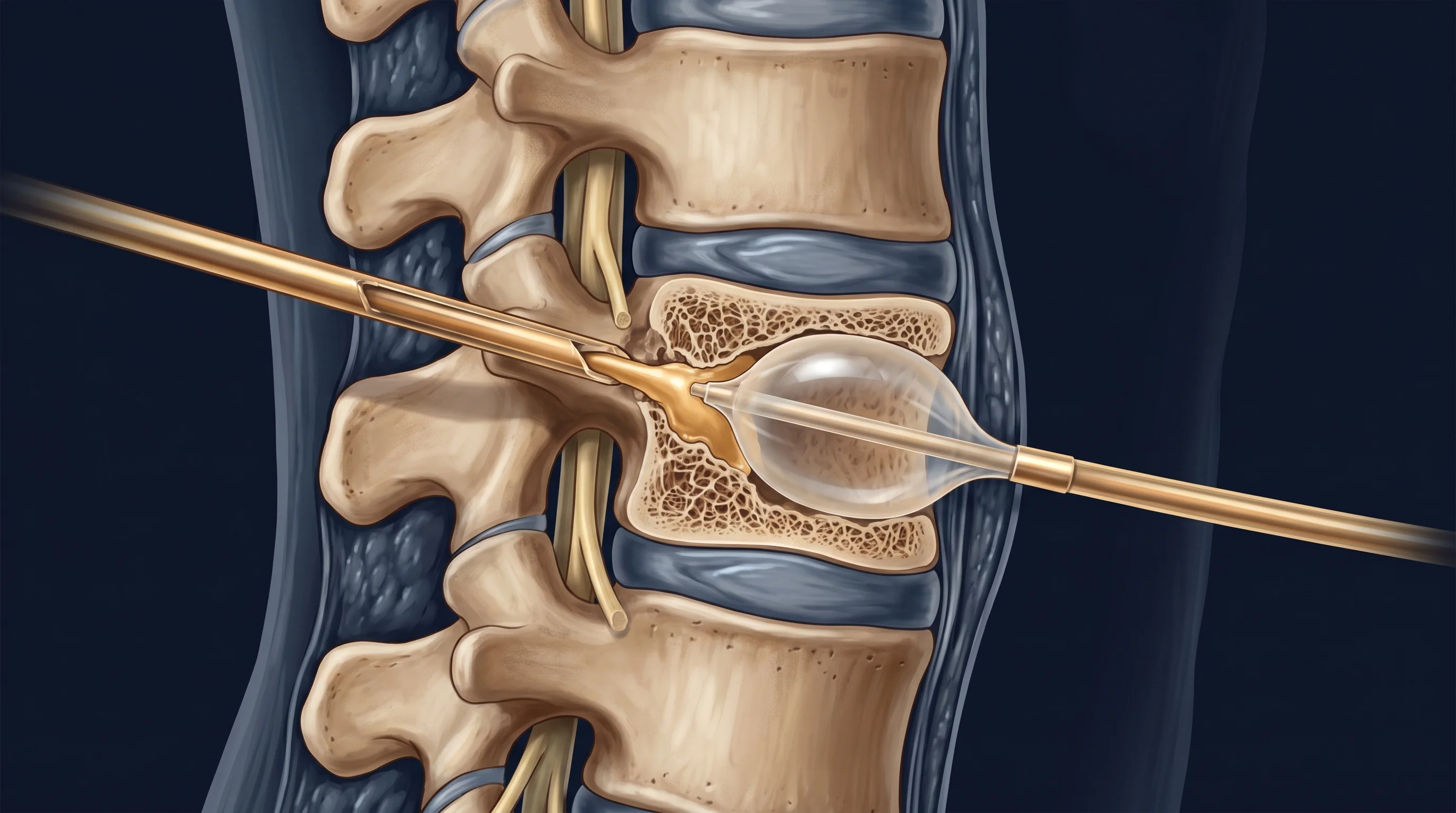
Kyphoplasty is a minimally invasive spinal procedure that repairs vertebral compression fractures by restoring vertebral body height and stabilizing the fracture with bone cement.
The procedure uses a balloon tamp technique. Through a small incision in the back, the provider inserts a narrow tube into the fractured vertebra under fluoroscopic guidance. A surgical balloon is then threaded through the tube and inflated inside the collapsed vertebra. This inflation creates a cavity and lifts the compressed bone toward its original height.
Once the cavity is formed, the balloon is deflated and removed. The provider fills the cavity with polymethyl methacrylate (PMMA), a medical-grade bone cement that hardens within minutes. The cement locks the vertebra in its restored position, providing immediate structural stability.
Kyphoplasty differs from vertebroplasty, a related procedure. Vertebroplasty injects cement directly into the fracture without first creating a cavity. Kyphoplasty’s balloon step offers two advantages: it restores more vertebral height, and the pre-formed cavity allows controlled cement placement, which reduces the risk of cement leakage into surrounding tissues.
The entire procedure takes approximately 20 minutes per vertebral level treated. It is performed under local anesthesia with sedation, and most patients are discharged the same day.
Conditions We Treat with Kyphoplasty in St. Louis
Kyphoplasty specifically addresses vertebral compression fractures, but the underlying causes of those fractures vary.
Osteoporotic Compression Fractures
Osteoporosis is the most common cause of vertebral compression fractures. As bone density decreases, the vertebral body becomes too weak to support normal loads. Fractures occur during routine activities such as bending, lifting, or even coughing. Women over 50 are at highest risk, though men with osteoporosis are also affected. In the Midwest, limited sun exposure during fall and winter months reduces vitamin D synthesis, which accelerates bone density loss.
Traumatic Vertebral Fractures
Falls, car accidents, and sports injuries can fracture vertebrae even in patients with normal bone density. When the fracture results in a compression pattern where the vertebral body collapses but the spinal cord remains intact, kyphoplasty can stabilize the fracture and restore height. The procedure is particularly valuable when the fracture causes severe pain that limits mobility.
Cancer-Related Spinal Fractures
Certain cancers, including multiple myeloma, breast cancer, and lung cancer, metastasize to the spine and weaken vertebral bone. Pathologic compression fractures from cancer cause debilitating pain and progressive spinal deformity. Kyphoplasty provides structural stability and pain relief, allowing patients to continue cancer treatment with improved quality of life.
Progressive Kyphotic Deformity
When compression fractures go untreated, the spine curves forward progressively. This kyphotic deformity increases the load on adjacent vertebrae, raising the risk of additional fractures. Kyphoplasty interrupts this cascade by restoring vertebral height and reducing the mechanical strain on neighboring segments.
Advantages of Kyphoplasty at St. Louis Pain Center
Rapid Pain Relief
Clinical studies report that over 90% of kyphoplasty patients experience significant pain reduction within 48 hours of the procedure. Many patients notice improvement before they leave the clinic. This stands in stark contrast to conservative management, where bed rest and bracing can require 8 to 12 weeks before fracture pain subsides.
Same-Day Discharge
Kyphoplasty does not require a hospital stay. The procedure is performed with local anesthesia and sedation. Most patients are monitored for one to two hours after the procedure and then discharged home. You sleep in your own bed the same night.
Vertebral Height Restoration
The balloon tamp technique restores compressed vertebral height by an average of 2.5 to 3.5 millimeters, according to published clinical data. While this may sound small, even partial height restoration reduces kyphotic angulation and improves spinal alignment. Better alignment means less strain on the muscles and ligaments supporting the spine.
Prevention of Further Collapse
Once PMMA cement hardens inside the vertebra, the fracture cannot collapse further. The stabilized vertebra also reduces abnormal loading on adjacent vertebrae, which may lower the risk of cascade fractures in neighboring segments.
Why Choose St. Louis Pain Center for Kyphoplasty?
St. Louis Pain Center performs kyphoplasty as part of a complete approach to spinal pain management. We evaluate whether kyphoplasty is appropriate based on fracture age, bone density, imaging findings, and your overall health.
Not every compression fracture requires kyphoplasty. Fresh fractures under six to eight weeks old respond best. Older, healed fractures may not benefit. Our evaluation process ensures that patients who receive kyphoplasty are the patients most likely to benefit from it.
Located near Washington University School of Medicine, our team brings interventional expertise to every procedure. We coordinate with your primary care provider, endocrinologist, or oncologist to address the underlying cause of your fracture alongside the fracture itself. Learn more about our pain control approach and how kyphoplasty fits into your broader treatment plan.
Convenient Access from Arnold, Fenton, and Surrounding Neighborhoods in St. Louis
St. Louis Pain Center is located at 4455 Telegraph Rd #250, St. Louis, MO 63129. Patients travel from Arnold, Fenton, Oakville, Mehlville, Lemay, Affton, Concord, Crestwood, Sunset Hills, Webster Groves, and Kirkwood for kyphoplasty consultations and procedures.
Our South County location is easily reached from Interstate 255, Highway 141, and Highway 30. Patients referred from physicians affiliated with Washington University School of Medicine and other regional health systems find our office conveniently located for both consultation and same-day procedures.
Schedule Your Kyphoplasty Appointment
A vertebral compression fracture does not have to mean months of bed rest and diminished quality of life. Kyphoplasty can stabilize your fracture and reduce your pain in a single outpatient visit.
Call (314) 846-2100 or visit us at 4455 Telegraph Rd #250, St. Louis, MO 63129 to schedule your evaluation.
Kyphoplasty FAQs for St. Louis Patients
How do I know if I have a compression fracture?
Sudden, severe mid-back pain is the most common symptom, especially if it worsens with standing or walking and improves when lying down. An MRI or CT scan confirms the diagnosis and determines whether the fracture is recent enough to treat with kyphoplasty.
Is kyphoplasty painful?
The procedure is performed under local anesthesia with sedation. Most patients report feeling pressure rather than pain during the procedure. Post-procedure soreness at the incision site typically resolves within a few days.
How soon can I return to normal activities?
Most patients resume light daily activities within 24 to 48 hours. Heavy lifting and strenuous exercise should be avoided for at least two to four weeks. Your provider will give you specific activity guidelines based on your fracture and bone density.
What are the risks of kyphoplasty?
Kyphoplasty is a safe procedure with a low complication rate. The most discussed risk is cement leakage, where a small amount of PMMA escapes the vertebral body. The balloon tamp technique reduces this risk compared to vertebroplasty. Other rare risks include infection, bleeding, and nerve irritation.
Will my insurance cover kyphoplasty?
Most insurance plans, including Medicare, cover kyphoplasty for vertebral compression fractures when conservative treatment has not provided adequate relief. Our office verifies coverage before scheduling your procedure.
Can kyphoplasty be performed on multiple vertebrae?
Yes. If you have compression fractures at multiple levels, kyphoplasty can be performed on more than one vertebra during the same session. Each additional level adds approximately 20 minutes to the procedure time.
Related Services
Kyphoplasty addresses the fracture, but ongoing spinal health requires a broader strategy. Medication management can include bone-strengthening medications to reduce future fracture risk. Injection therapy treats inflammation in adjacent spinal segments that may develop compensatory pain after a compression fracture.
Explore our complete pain control offerings at St. Louis Pain Center to see how we support patients through every stage of spinal pain treatment.
Conditions This Treatment Addresses

Frequently Asked Questions
Get Started Today
Ready to Start Your Recovery?
Take the first step. Our team is ready to help you reclaim your life from pain.