

★★★★★
"Had a wonderful experience with this team! Everyone there is so caring and helped me through my knee treatments. Recommend them highly!"
Hyaluronic acid knee injections at St. Louis Pain Center restore joint lubrication and reduce osteoarthritis pain. Series of 3-5 injections with 6-12 months relief.
St. Louis Pain Center is conveniently located in the south St. Louis community, serving the same area as Washington University School of Medicine-affiliated practices.
You used to walk without thinking about it. Grocery runs. Stairs. Getting out of the car. Now each step brings a grinding ache that reminds you something has changed inside your knee.
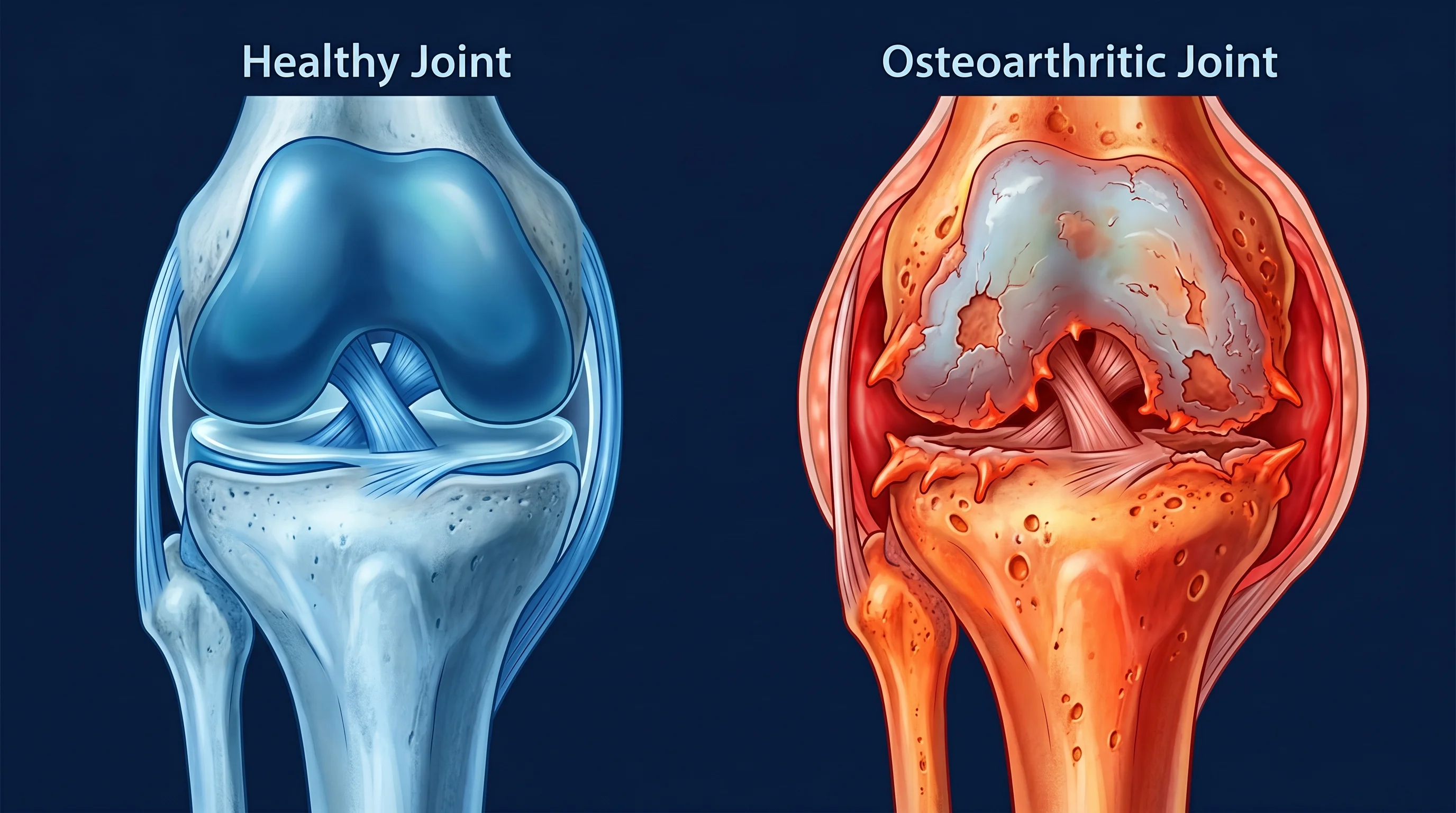
Osteoarthritis strips away the natural cushion between your bones. That cushion is largely made of hyaluronic acid, a gel-like substance your body produces less of as cartilage breaks down. Without it, bone meets bone. The friction creates swelling. The swelling creates stiffness. The stiffness steals your mobility.
In St. Louis, desk-job culture and long sedentary winters accelerate this cycle. Reduced movement leads to weight gain. Extra weight loads already-damaged joints harder. The pain worsens. You move even less.
If oral medications, ice packs, and physical therapy have stopped helping, you are not out of options. Hyaluronic acid injections deliver a lab-made version of your body’s own joint fluid directly where you need it most. No surgery. No general anesthesia. No hospital stay.
This page explains how the treatment works, who benefits most, and what to expect at St. Louis Pain Center.
Hyaluronic acid injections are a non-surgical treatment that restores lubrication to joints damaged by osteoarthritis. A thick gel is injected into the joint capsule to reduce friction, absorb shock, and improve range of motion.
Your joints naturally contain hyaluronic acid. Healthy knee fluid has a hyaluronic acid concentration of about 2.5 to 4 mg/mL. In osteoarthritis, that concentration drops significantly. The fluid becomes thinner. It loses its ability to cushion and protect.
Injectable hyaluronic acid comes in different molecular weight formulations. This matters because molecular weight affects how long the treatment lasts and how the gel behaves inside the joint.
Low molecular weight products (500,000 to 730,000 daltons) spread easily through the joint space. They may require a series of 5 weekly injections. Supartz and Euflexxa fall into this category.
High molecular weight products (6,000,000 daltons) are thicker and may provide longer-lasting cushioning. Synvisc-One is an example that can be given as a single injection.
All FDA-approved brands, including Synvisc, Euflexxa, and Supartz, have demonstrated effectiveness in clinical trials. The choice of product depends on your joint condition, prior treatment response, and insurance coverage.
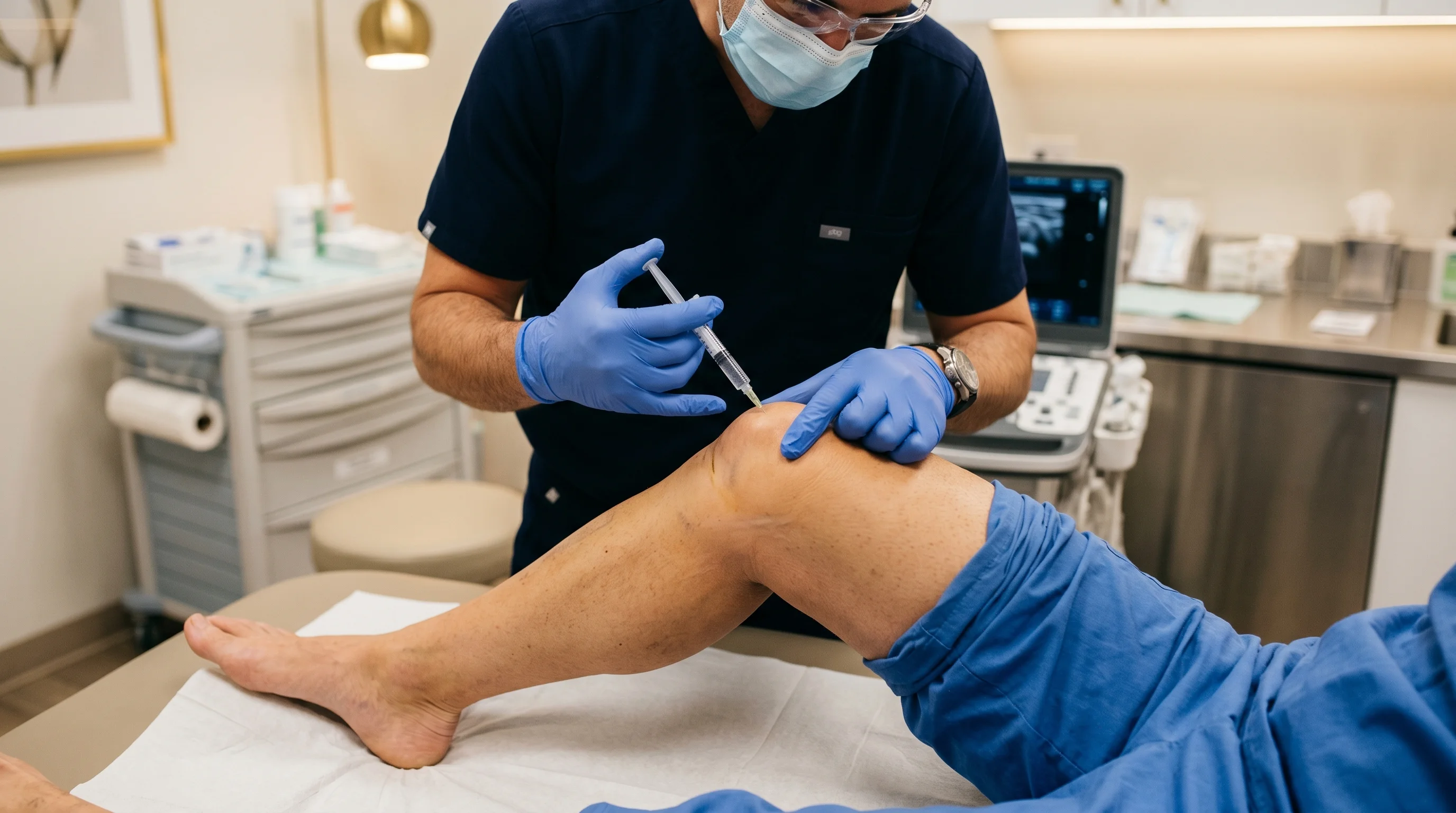
The procedure itself takes about 15 minutes. Your provider cleans the injection site, may use a local anesthetic, and guides the needle into the joint space. Some protocols use ultrasound or fluoroscopic guidance for precise placement.
A typical treatment cycle involves 3 to 5 injections given one week apart. Relief usually begins within 2 to 4 weeks after the final injection and can last 6 to 12 months. When pain returns, the series can be repeated.
Hyaluronic acid injections are most commonly associated with knee osteoarthritis. They also address several related joint conditions that cause chronic pain, reduced mobility, and declining quality of life.
Knee osteoarthritis is the primary indication for hyaluronic acid injections. As cartilage wears away, the synovial fluid that normally lubricates the joint loses its viscosity. Hyaluronic acid injections restore that viscosity directly. Clinical studies show meaningful pain reduction in patients with mild to moderate osteoarthritis (Kellgren-Lawrence grades 2 and 3). Patients who have not responded to anti-inflammatory medications or corticosteroid injections often find significant relief with viscosupplementation.
Not all chronic knee pain stems from advanced arthritis. Repetitive stress, prior injuries, and age-related cartilage thinning can produce persistent discomfort without full-blown osteoarthritis. Hyaluronic acid can improve the joint environment even in these earlier stages, potentially slowing further degeneration.
Morning stiffness that takes 30 minutes or more to loosen often signals declining joint fluid quality. Hyaluronic acid injections improve the viscosity and elasticity of synovial fluid, making movement smoother. Many patients report better range of motion within weeks of completing their injection series.
Previous knee injuries, including meniscus tears, ligament sprains, and cartilage damage, increase the risk of early-onset osteoarthritis. Hyaluronic acid can support the joint during recovery and reduce pain while the surrounding tissues heal and strengthen through physical therapy.
Inflammation is a hallmark of arthritis. While hyaluronic acid injections are not anti-inflammatory drugs, they reduce bone-on-bone friction that triggers the inflammatory cycle. Less friction means less irritation. Less irritation means less swelling over time.
Choosing where to receive joint injections matters. Technique, guidance methods, and follow-up care all influence outcomes.
Accurate needle placement determines how well the injection works. At St. Louis Pain Center, providers use imaging guidance to confirm the needle reaches the joint capsule. Injections placed outside the joint space are wasted. Guided placement reduces this risk and improves the chance of meaningful pain relief.
Hyaluronic acid injections offer a true alternative to knee replacement surgery for patients who are not ready for or not candidates for an operation. The treatment can be repeated every 6 to 12 months as needed. There is no cumulative tissue damage from repeated series, unlike corticosteroid injections, which can weaken cartilage and tendons over extended use.
Joint pain rarely exists in isolation. Excess body weight, muscle weakness, and poor movement patterns all contribute to knee deterioration. At St. Louis Pain Center, hyaluronic acid injections are part of a broader treatment plan. Patients may also receive physical therapy referrals, weight management guidance, or complementary injection therapies depending on their condition.
Most patients walk out of the office after their injection and return to normal activities the same day. Some experience mild swelling or stiffness at the injection site for 24 to 48 hours. No crutches, no braces, no extended recovery period.
St. Louis Pain Center focuses exclusively on pain management. Joint injections are not a side offering here. They are a core part of what this clinic does every day. That volume of experience translates into refined technique and better outcomes.
The clinic is located minutes from Washington University School of Medicine, serving the same south St. Louis community with specialized pain care. Patients who need advanced diagnostics or surgical consultations have easy access to the broader medical infrastructure in the region.
For more orthopedic pain treatments, visit our Orthopedic Services page.
Patients at St. Louis Pain Center have shared their experiences with hyaluronic acid knee injections.
“Had a wonderful experience with this team! Everyone there is so caring and helped me through my knee treatments. Recommend them highly!” — Stephanie Baker, Jul 2024 (5★)
“Anissa Wheeler was my therapist… I was having left knee pain and my doctor said that I needed knee surgery. I am 71 years old and I didn’t want to go through surgery so I went to STL Pain Center… I took a gel shot once a week for 5 weeks and they helped tremendously.” — Lester Brannam, May 2024 (5★)
“The gel injections are fabulous. The staff is very pleasant and are very knowledgeable. It has been a real pleasure working with all of them and getting the relief my knees were needing.” — Patricia Diess, May 2024 (5★)
St. Louis Pain Center is located at 4455 Telegraph Rd #250, St. Louis, MO 63129. The office is easily accessible from Oakville, Mehlville, Lemay, Affton, Concord, Arnold, Fenton, Crestwood, Sunset Hills, Webster Groves, and Kirkwood.
The clinic sits minutes from Washington University School of Medicine, serving the same community with dedicated pain management. Free parking is available on-site.
If knee pain is limiting your daily activities and other treatments have stopped working, hyaluronic acid injections may provide the relief you need. Call St. Louis Pain Center at (314) 846-2100 to schedule a consultation and learn whether viscosupplementation is right for your condition.
[Schedule an Appointment — (314) 846-2100]
Most patients experience relief for 6 to 12 months after completing a full injection series. Results vary depending on the severity of your osteoarthritis, your activity level, and your body weight. When pain returns, the treatment series can be repeated.
The injection itself involves a brief pinch. Many providers apply a local numbing agent before the procedure. Some patients feel temporary pressure as the gel enters the joint. Mild soreness at the injection site for 1 to 2 days is normal.
A typical series involves 3 to 5 weekly injections depending on the product used. Some high-molecular-weight formulations require only a single injection. Your provider will recommend the appropriate protocol based on your diagnosis.
Most insurance plans cover hyaluronic acid injections for knee osteoarthritis when conservative treatments like physical therapy and oral medications have been tried first. Our office staff can verify your coverage before treatment begins.
Cortisone is a steroid that reduces inflammation quickly. Hyaluronic acid restores joint lubrication. Cortisone works faster (within days) while hyaluronic acid takes 2 to 4 weeks to reach full effect. Hyaluronic acid is generally safer for repeated use because it does not break down cartilage over time.
The FDA has approved hyaluronic acid injections specifically for the knee. Some providers use them off-label in the hip, shoulder, and ankle. Discuss your specific joint concerns during your consultation at St. Louis Pain Center.
Hyaluronic acid injections are one of several orthopedic pain treatments offered at St. Louis Pain Center. Patients with joint pain may also benefit from PRP Therapy or Regenerative Therapy depending on the underlying cause of their condition. Explore all available options on our Orthopedic Services page.
Patient Stories
"Had a wonderful experience with this team! Everyone there is so caring and helped me through my knee treatments. Recommend them highly!"
"Anissa Wheeler was my therapist... I was having left knee pain and my doctor said that I needed knee surgery. I am 71 years old and I didn't want to go through surgery so I went to STL Pain Center... I took a gel shot once a week for 5 weeks and they helped tremendously."
"The gel injections are fabulous. The staff is very pleasant and are very knowledgeable. It has been a real pleasure working with all of them and getting the relief my knees were needing."
⭐ 4.9 out of 5 — Based on Google Reviews
Get Started Today
Take the first step. Our team is ready to help you reclaim your life from pain.